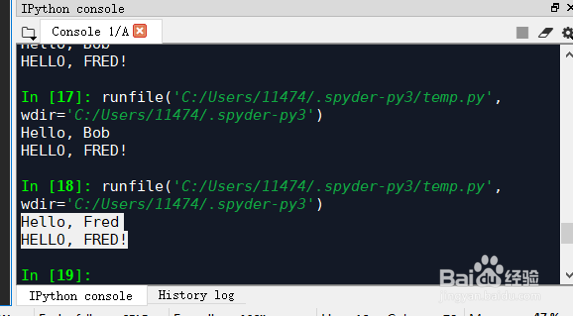
1、在python中常常使用def关键字来定义一个函数 。注意缩进。
举个例子:
def sign(x):
if x > 0:
return 'positive'
elif x < 0:
return 'negative'
else:
return 'zero'
for x in [-1, 0, 1]:
print(sign(x))
# Prints "negative", "zero", "positive"

2、输出结果如下 :
negative
zero
positive
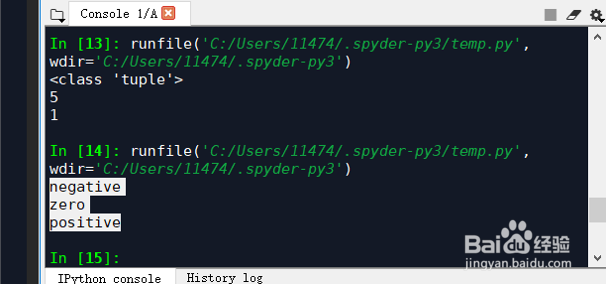
3、在定义函数的时候我们也可以缺省一些参数。
举个例子:
def hello(name, loud=False):
if loud:
print('HELLO, %s!' % name.upper())
else:
print('Hello, %s' % name)
hello('Bob') # Prints "Hello, Bob"
hello('Fred', loud=True) # Prints "HELLO, FRED!"
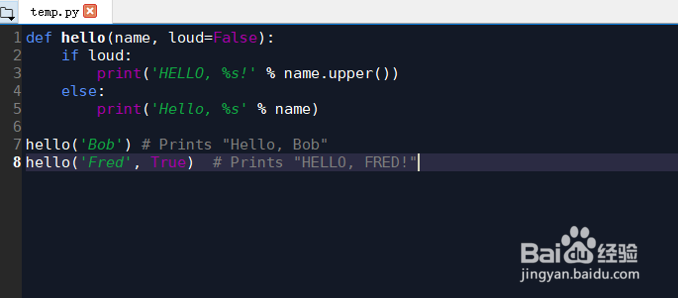
4、运行结果如下:
Hello, Bob
HELLO, FRED!

5、python定义类的方式也非常直接。
class Greeter(object):
# Constructor
def __init__(self, name):
self.name = name # Create an instance variable
# Instance method
def greet(self, loud=False):
if loud:
print('HELLO, %s!' % self.name.upper())
else:
print('Hello, %s' % self.name)
g = Greeter('Fred') # Construct an instance of the Greeter class
g.greet() # Call an instance method; prints "Hello, Fred"
g.greet(loud=True) # Call an instance method; prints "HELLO, FRED!"

6、运行结果如下:
Hello, Fred
HELLO, FRED!